How Online Gaming Platforms Work in India 2026.
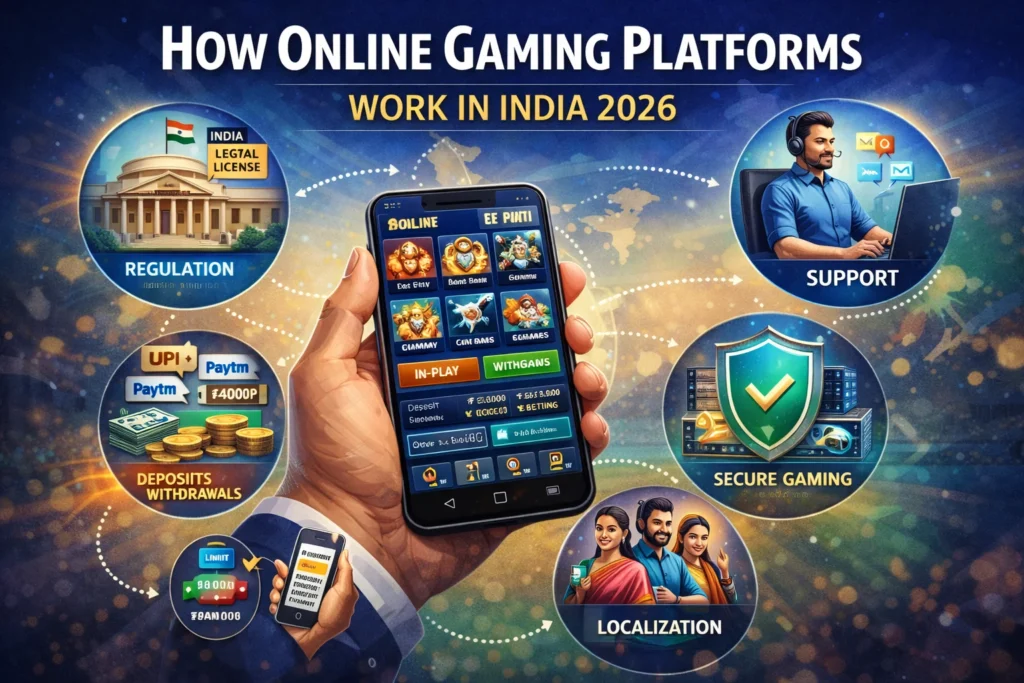
Online gaming in India has come a long way, from being casual mobile games played for fun to heavy-duty platforms that allow aggressive game playing, leaderboards, tournaments, and wallet-based systems. In 2026, the sector is no longer just about games; it’s about an entire technology-driven ecosystem connecting players, payment gateways, fraud systems, compliance layers, and customer support,all in real time.
For many users, the surface experience is quite straightforward: download an app from an online store, click a game, and start playing. Backing up that simplicity, however, is a convoluted structure that determines how games are hosted, how fairness is managed, how rewards are distributed, and how platforms remain compliant with a largely disparate state-by-state regulatory environment.
The following blog explains, in a lucid and pragmatic way, online gaming platforms in India. You will understand how online gaming works, the types of online games popularized by India, the differences between skill-based versus chance games, and get a full gaming platforms overview that readers in India can actually use. We’ll also unpack the broader digital gaming ecosystem being created today, especially at the back of mobile-first users, UPI growth, and the rising tide of demand for secure platforms.
Table of Contents
1. What Are Online Gaming Platforms in India?
The gaming platforms in India are digital, which means they are mostly applications on the mobile device or a website through which users can gain access to a pool of games on a single interface rather than installing different applications for different games on the device, depending on the nature of the gaming platform.
A platform is different from a gameplay application in its infrastructure. In this case, a platform has the following components:
- user accounts
- secure login capabilities
- in-app wallet or payment management
- game catalog and matchmaking logic
- anti-cheat monitoring
- bonus and rewards engine
- support services and dispute mechanisms for players
Player support
The Indian gaming community in 2026 is very mobile-first. This implies that all platforms are optimized for:
- Low-Data Gameplay
- fast loading
- small installation size
- smooth performance on mid-range smartphones
This is why you will observe that most big players give importance to APK-based install, faster login, and easy dashboards.
For a detailed platform-style breakdown (games + app + features), see:Lotus365: Complete Guide to India’s Most Trusted Online Gaming Platform
2. How Online Gaming Works: The Full Behind-the-Scenes Flow
If you’ve ever wondered how online gaming works, here’s the complete flow explained from a platform point of view,what happens from the moment a user opens the app to the moment the game ends.
Step 1: Account + Identity Layer
First, the platform needs to recognise you as a unique user. This is why apps use:
- mobile number OTP logins
- device verification
- sometimes KYC (for withdrawal or higher limits)
This layer helps prevent duplicate accounts and fraud.
Step 2: Game Selection + Lobby System
Once logged in, the platform shows:
- game tiles
- “rooms” or “tables”
- tournaments
- leaderboards
The lobby system is not just a design feature; it’s a matchmaking engine. It groups players based on:
- game type
- stake range
- skill level (in many formats)
- table availability
Step 3: Payment + Wallet Infrastructure
This is the backbone of platform economics.
In India, this layer typically supports:
- UPI
- net banking
- card payments
- wallet transfers (platform wallet)
The wallet layer includes:
- deposit tracking
- bonus credits separation (cash vs promo)
- withdrawal validation
- transaction logs
Step 4: Game Logic + Randomness Engine
For many games, fairness depends on the game logic being unbiased. Depending on the type of game:
- skill games rely on user decisions + stable rules
- chance games rely on RNG (Random Number Generator)
This is one of the most sensitive components because it impacts trust.
Step 5: Anti-Cheat + Security Monitoring
Modern online platforms in India actively detect:
- bots
- scripted play
- suspicious clicking patterns
- multiple accounts
- unusual deposit/withdraw spikes
Even casual users benefit from this. It reduces “unfair player advantage.”
3. Types of Online Games India Players Prefer (2026)
To understand types of online games India has popular, it helps to view them as categories,because different game types use different platform systems.
A) Skill-based Card Games
Popular examples include rummy formats and strategy-based card tables. These games rely more on decision-making, memory, probability, and risk control.
They are often used in:
- tournaments
- private tables
- quick matches
B) Arcade & Casual Games
These include quick, action-based experiences where users play short rounds and aim for high scores. These games work well in India because:
- they don’t require long time commitment
- they work smoothly on low-end phones
- the learning curve is low
C) Live Casino / Live Rooms Style Games
Some platforms provide live-dealer interfaces and real-time rooms. This segment typically requires stronger bandwidth and secure streaming layers.
D) Sports-Based Gaming Formats
This category includes live match engagement formats, interactive play, and sports-focused dashboards.
To understand how multi-category gaming libraries work, visit: Lotus365 Games – Play, Bet & Win Daily Bonuses
4. Skill Based vs Chance Games: What’s the Difference?
This is one of the most searched topics in India right now: skill based vs chance games.
Skill-based games (simplified)
A skill game is one where:
- player strategy matters
- decisions influence outcomes
- practice improves performance over time
Examples can include strategy-heavy card games, chess-like logic formats, and competitive score-based play.
Chance-based games (simplified)
A chance game can be defined as a game in which:
- The results largely depend on luck
- user control is limited
- results cannot be meaningfully improved through skill
This is an important point because the Indian online gaming market is not operated in a vacuum and is affected by legal interpretations and state laws.
There are certain Indian legal discussions and industry circles that classify skill-based formats in a different manner from chance-based games in the style of gambling. The MeitY IT Rules amendments in April 2023 also introduced an environment for online gaming intermediaries.
Further, courts and states have considered more stringent measures such as KYC procedures and limits on playing in real-money variants.
5. Gaming Platforms Overview India: Key Features Explained
A strong gaming platforms overview India must include the features that define a modern platform (not just the games).Like Lotus365
1) Smooth Onboarding
Platforms focus heavily on:
- quick signup
- minimal steps
- OTP login
Because in India, users drop off if registration feels complicated.
2) Bonus & Reward Engine
Most platforms include:
- welcome bonus
- daily bonus
- referral rewards
- loyalty tiers
These are controlled by a backend engine that ensures bonus abuse doesn’t happen.
3) Game Stability + Latency Control
For real-time games, milliseconds matter. Platforms invest in:
- fast servers
- load balancing
- regional routing
4) Customer Support Infrastructure
Modern platforms offer:
- WhatsApp or chat support
- ticketing systems
- dispute resolution
Support builds trust, especially for withdrawals.
6. The Digital Gaming Ecosystem India Is Building
When people talk about the digital gaming ecosystem in India, they actually refer to something beyond mobile applications.
The ecosystem of India comprises:
- “gaming studios producing formats”
- game distribution via platforms
- influencers marketing games
- payment systems enabling deposits (UPI)
- compliance layer user safety guiding
- telecoms and smartphones in scale
The main push for this ecosystem comes from the mobile economy in India. UPI has smoothened the process. Affordable data has increased interactions. Digital entertainment has become a normal occurrence.
On the other hand, regulatory talks are still underway, particularly in connection with online real-money gaming and skill vs. chance-based games. Reuters has covered issues between gaming operators and new regulatory restrictions that have resulted in legal battles.
7. Safety, KYC & Responsible Play: Why Platforms Enforce Rules
In 2026, trust is everything. Platforms introduce safety measures not to create friction, but to ensure:
- minors don’t access restricted formats
- withdrawals go to genuine users
- account takeovers are prevented
- gaming behaviour stays controlled
This is where KYC systems, verification, and user limits appear,especially on platforms involving wallet transactions.
8. How to Choose the Right Gaming Platform (Checklist)
Use this practical checklist before installing or registering:
Platform selection checklist
Choose platforms with:
- fast login + stable app
- transparent bonus rules
- clear withdrawal steps
- strong customer support
- secure payment options
- fair play / anti-cheat systems
Also consider whether the platform’s games match your preference: casual vs competitive vs strategic.
- Official IPL website (example of digital sports ecosystem scale in India).
Conclusion
Online gaming websites in India are not developed on games alone; they integrate secure log-ins, wallets, match-making systems, anti-cheat monitoring, and user safety rules into one continuous experience. Once you understand exactly how online gaming works, the kind of online gaming that is favored by the population of India, and the distinction between games based on skill and chance-based games, it becomes easier to choose the right platform. As the digital gaming ecosystem within India increases, a well-informed user will stand to benefit always from safe play, smart choices, and trusted platforms.
Frequently Asked Question
Q1. How do online gaming platforms work in India in 2026?
Online gaming platforms work in India in 2026 through a centralized digital system that combines user registration, KYC verification, game hosting, real-time servers, wallet management, and result settlement. These platforms integrate UPI payments, secure APIs, and compliance checks to ensure smooth and legal gameplay for Indian users.
Q2. Why are online gaming platforms in India becoming more structured in 2026?
Online gaming platforms in India are more structured in 2026 due to stricter compliance standards, better payment transparency, improved user protection, and growing demand for skill-based digital entertainment. This structured approach improves trust and long-term platform sustainability.
Q3. What technology powers how online gaming platforms work in India?
How online gaming platforms work in India is powered by cloud servers, RNG or skill-logic engines, real-time data processing, AI-based fraud detection, and encrypted payment gateways. These technologies ensure fast gameplay, fair results, and secure transactions.
Q4. How do wallets and payments function on online gaming platforms in India?
Online gaming platforms work in India by using a unified wallet system where users deposit funds via UPI, net banking, or cards. Winnings, bonuses, and withdrawals are tracked digitally, allowing instant balance updates and faster payouts under Indian payment norms.
Q5. Are online gaming platforms in India legal in 2026?
Online gaming platforms in India operate legally in 2026 when they focus on skill-based formats and follow applicable state laws, platform policies, and payment compliance rules. Legal clarity has improved, helping platforms design games aligned with Indian regulations.
Q6. How does user verification work on online gaming platforms in India?
User verification is a core part of how online gaming platforms work in India. Platforms typically require mobile OTP verification, age confirmation, and optional KYC to prevent fraud, duplicate accounts, and underage access.
Q7. How do online gaming platforms ensure fair gameplay in India?
Online gaming platforms in India ensure fair gameplay using certified algorithms, transparent game rules, real-time monitoring, and anti-cheat systems. In 2026, fairness is a key trust factor influencing platform reputation.
Q8. What role does localization play in how online gaming platforms work in India?
Localization plays a major role in how online gaming platforms work in India by offering regional languages, Indian payment options, culturally familiar games, and local customer support, making platforms more accessible to Indian users.